A let in tennis is a call that replays a serve or a point with no penalty for either player. On a serve, the ball clips the net and still lands in the correct service box. The server then takes that serve again, and a first-serve let keeps both attempts. No one loses a point. The International Tennis Federation (ITF) covers the call in Rules 22 and 23.
Key Takeaways
- A let is a call that replays a serve or a point with no penalty.
- A service let happens when the ball clips the net and lands in the correct service box.
- A let on the first serve keeps both attempts, and a let on second serve gives one more serve.
- Every other let replays the whole point, starting with a fresh first serve.
- No rule limits how many lets a server can hit in a row.
- The word let most likely comes from an Old Saxon word that means to hinder.
What Is a Let in Tennis and What Does the Call Mean?
A let is a call that tells both players to replay the serve or the point. A let is not a fault and not a free point. Rule 23 of the ITF Rules of Tennis 2026 says the whole point is replayed, with one exception for the second serve.
Junior players meet the let in their first match, so our youth programs teach the call alongside the serve. The coach explains the word, the hand signal and the replay. New players then stop guessing what happens after a net cord.
The word itself sounds odd, so the next section looks at where it came from.
Why Is It Called Let in Tennis?
The word let is called that because it most likely comes from the Old Saxon word lettian, which means to hinder. TennisCompanion gives that origin. UTR Sports adds the Old English word lettan, and both words mean to delay or obstruct.
A ball that clips the net hinders the serve, so the point stops. The same idea explains lets for a stray ball or a distracted receiver. Both situations hinder play, and the players start again.
No source settles the history, so treat every explanation as unproven. One idea links let to the French word filet, which means net. Another idea says the word simply means letting the player replay.
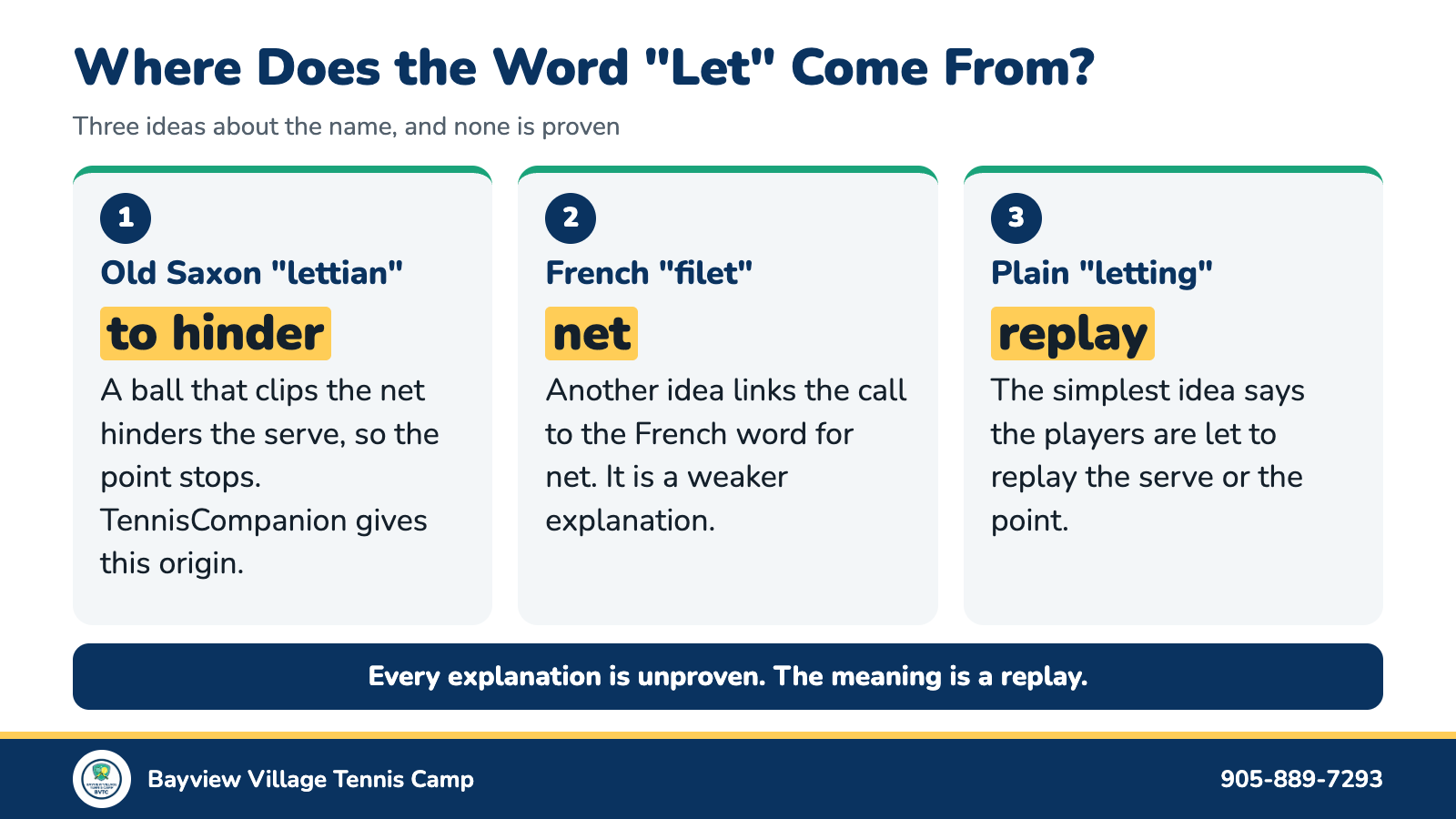
The graphic above shows the three origin ideas and marks all of them as unproven. Whatever the source, the practical meaning is a replay, and the next section shows how that works on a serve.
What Is a Let Serve in Tennis?
A let serve in tennis is a serve that touches the net, strap or band and is otherwise good. Rule 22 sets out the call. The USTA states it in plain words: the ball hits the top of the net and bounces into the correct service box.
A let in tennis serve has three causes under Rule 22 and Rule 21:
- The ball clips the net, strap or band and lands in the correct service box.
- The ball clips the net and then touches the receiver, the receiver’s partner or anything they wear or carry.
- The server hits the ball before the receiver is ready.
A receiver who tries to return the serve counts as ready. That detail stops a player from calling a let after the swing. The service boxes sit 6.40 metres (21 feet) from the net, and the court layout guide shows every line.
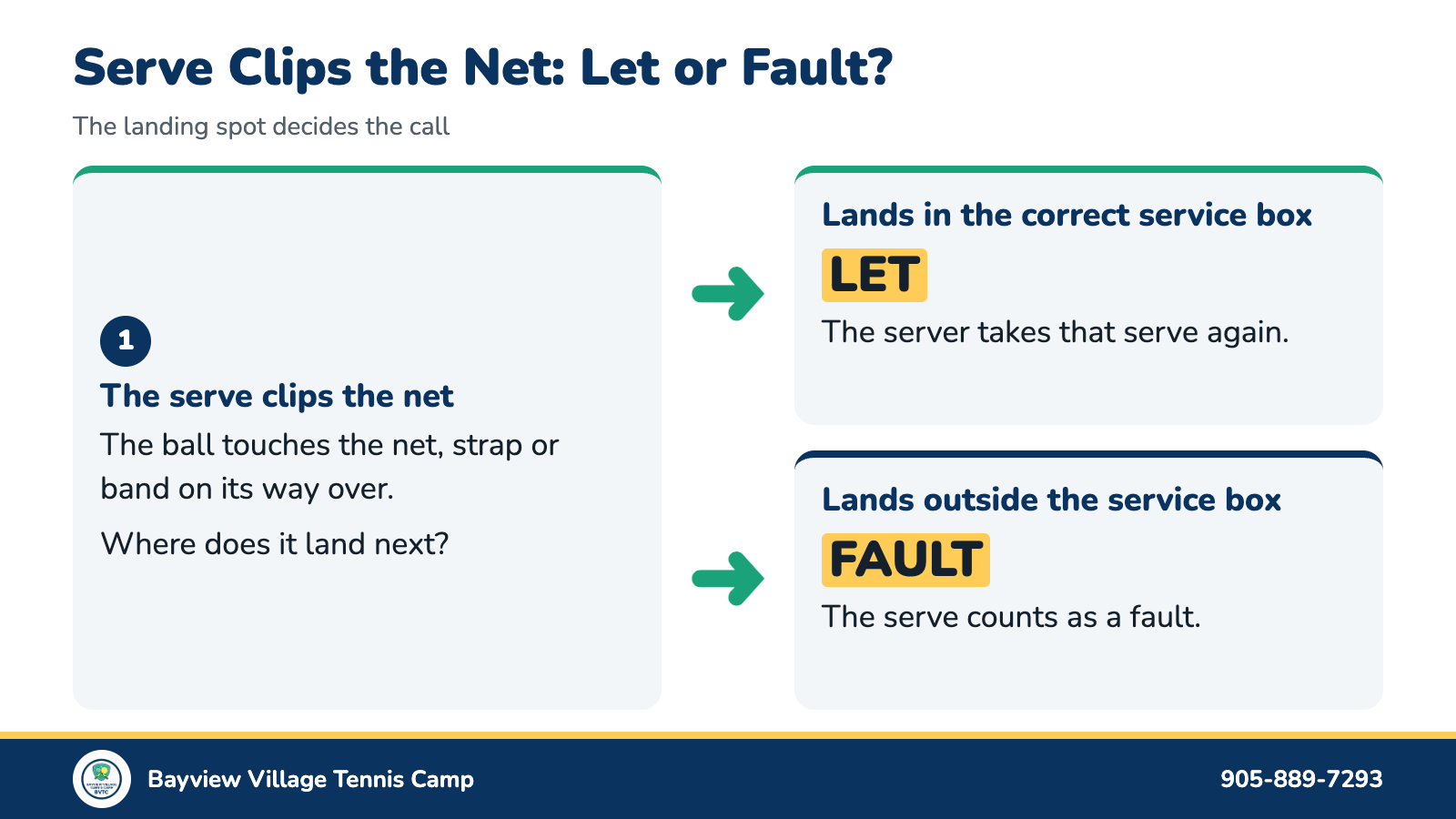
The table shows how a serve that touches the net is judged, depending on where the ball goes next.
| What the ball does | Call | What happens next |
|---|---|---|
| Clips the net and lands in the correct service box | Let | The server takes that serve again |
| Clips the net and lands outside the service box | Fault | The serve counts as a fault |
| Clips the net, then touches the receiver or the receiver’s partner | Let | The server takes that serve again |
| Hits the net post | Fault | The serve counts as a fault |
| Hits a singles stick, then the correct service court | Fault | The serve counts as a fault |
The first and third rows are the only service lets that involve the net. The graphic below turns that table into a quick decision path.
Now the question is what the server does after the call, because the answer changes between the first and second serve.
What Do the Let in Tennis Rules Say About Replaying?
The let in tennis rules say the whole point is replayed, except when the let happens on a second serve. Rule 23 states this. Rule 22 adds that a service let replays only that one serve.
Rule 22 also says a service let does not cancel a previous fault. A first-serve fault followed by a second-serve let means the server has one serve left. The earlier fault still counts, so a double fault is possible.
A different let works differently. Suppose a ball rolls onto the court after a first-serve fault. Rule 23 Case 1 says the whole point is replayed, starting with a first serve. The server regains both attempts because the point never really began.
That difference leads to the question most players ask next, about the second serve.
What Happens on a Let on the Second Serve?
A let on the second serve gives the server one more second serve. UTR Sports and TennisCompanion both describe it that way. The first-serve fault stays, and the server still has only one chance left.
A first-serve let is kinder to the server. A let in that case replays the serve, so the server keeps both attempts, as Tennis Express explains. A let on second serve is the only case where a call does not restart the whole point.
Players who build a dependable second serve feel less pressure in these moments. One more serve is still one serve, and the same fault rules apply.
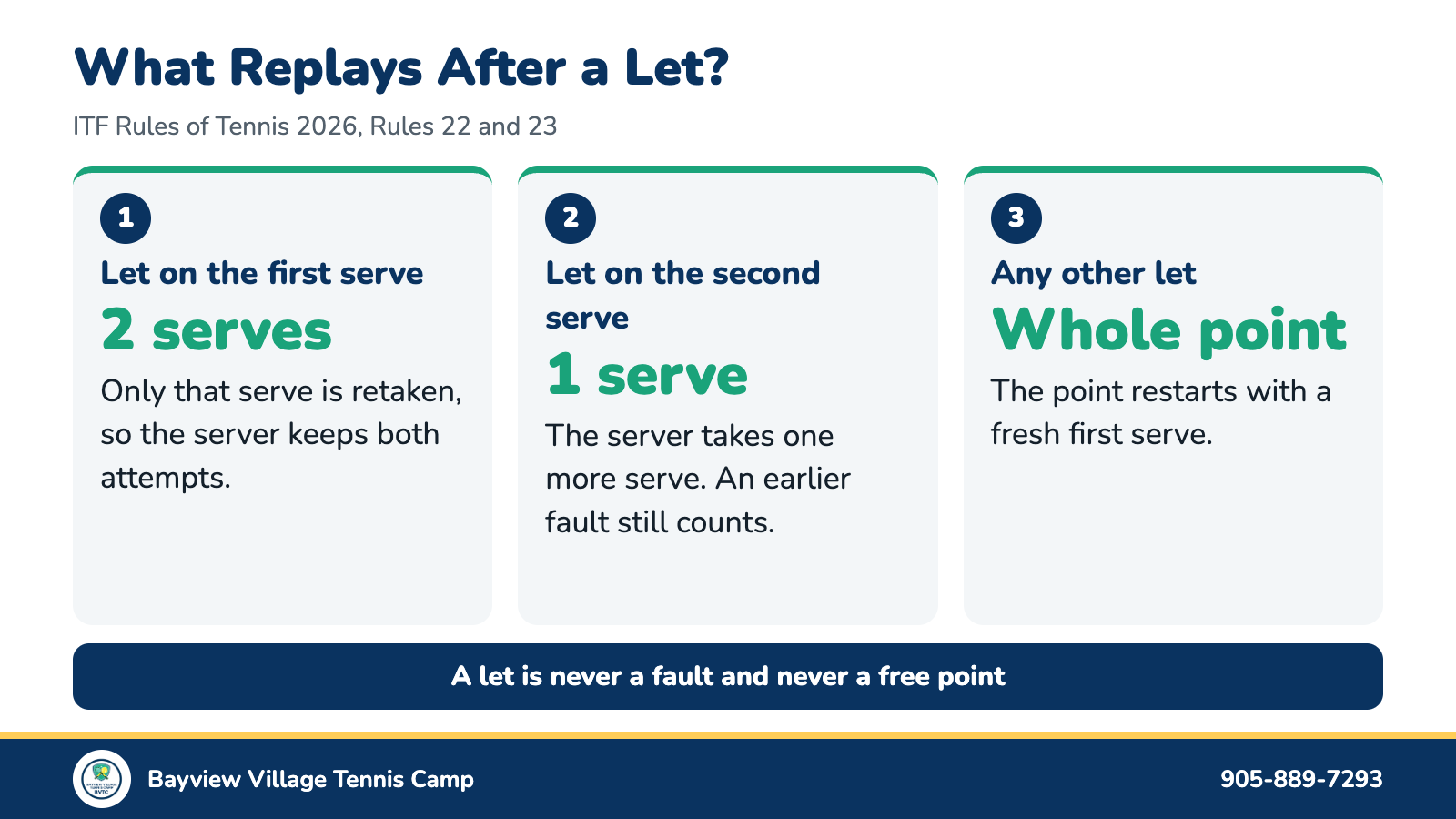
The graphic above compares what replays after each type of let. The next question is how often a let can happen.
How Many Lets Are You Allowed in Tennis?
There is no limit on how many lets you are allowed in tennis. UTR Sports states that no limit applies to how many service lets a player can hit in a row. Each let simply replays the serve.
A server who clips the net three times in a row serves a fourth time. The receiver cannot refuse the serve. Each call is judged by itself, so the count never matters.
Lets also leave the score alone. The point is replayed, and no one gains or loses a point. A match with ten lets has the same score logic as a match with none. Our scoring breakdown shows how points, games and sets are counted once play resumes.
A let does not always come from a serve, so the next section covers the calls during a point.
How Does a Let Change the Rhythm of a Match?
A let changes the rhythm of a match because the server stops, resets and starts the motion again. Tennis Express notes that the pause can break a server’s rhythm. The receiver gets a short extra moment to prepare.
A repeatable routine handles that pause well. The server takes a breath, bounces the ball and serves again at the same pace. The receiver walks back to the same ready position and waits.
Our junior lessons use the pause as a teaching moment in small games. The pause shows players that a calm reset beats a rushed second try. That habit also helps on days when nerves rise.
When Can You Call a Let During a Point?
You can call a let during a point when something outside the players’ control hinders play. Rule 26 says the point is replayed when an unintentional act hinders a player. A deliberate act of hindrance gives the hindered player the point.
Players call a let in these situations:
- A ball from another court rolls onto the court.
- A player is distracted by an unintentional act, such as a dropped ball or a loud noise.
- An object lands in the playing area and could cause a slip.
- The server starts before the receiver is ready.
The call must come at once, not after the point ends. UTR Sports says a service let should be called immediately. A late call looks like an excuse, so juniors learn to speak up early.
Stopping play also protects safety, and the safety reason matters most at junior camps with several courts side by side. The rules around lets have also shifted at some events, which the next section explains.
Have the Tennis Let Rules Changed?
The tennis let rules still include the service let in the ITF Rules of Tennis 2026, but some events have dropped it. Division I college tennis in the United States has used the no-let rule for years, according to UTR Sports. The 2018 Next Gen WTA Finals in Milan also used no-let serves, as Tennis Express reports.
In a no-let format, a serve that clips the net and lands in the box is played as a live ball. The receiver must return it, so return of serve practice matters. The server does not retake the serve.
These formats are tests and event choices, not the standard rule. A club match, a camp match and a recreational league all follow the regular service let unless the organizers say otherwise. Our starter rules guide covers the other basic calls, and the next section moves to junior play.
What Is a No-Let Rule in Junior Tennis?
A no-let rule in junior tennis would make a net-cord serve live, but standard junior matches use the normal service let. Tennis Express lists junior matches among those that play the standard let on serve. The junior tennis no let rule is therefore an event choice, not the default.
Parents can confirm the format before a tournament. The event sheet or the tournament desk states whether lets are played. Our guide to junior tournaments lists other questions worth asking before the first match.
Players who know both versions adapt faster. They finish the serve and play on until the call comes.
How Do Juniors Learn to Call a Let Fairly?
Juniors learn to call a let fairly by following one short routine and practising it in games. A routine removes the argument. The call is quick, the signal is clear and the point replays.
- Say “let” loudly as soon as the ball touches the net or the interruption happens.
- Raise a hand so the opponent knows play has stopped.
- Replay the serve for a service let, or the whole point for any other let.
- Play the point when in doubt, as TennisCompanion advises.
A certified coach can run these steps in small games so that every player makes the call in a safe, friendly setting.
Fair calls build trust between opponents, and trust keeps matches friendly. Fair calls are part of good sportsmanship, and coaches build that habit through repeated, friendly practice.
A few short side questions remain, and the next section answers them.
What Else Should You Know About Lets in Tennis?
Can You Let Twice in Tennis?
Yes, you can let twice in tennis, because no rule limits the number of consecutive service lets. The server simply serves again after each call. A second let on a second serve also gives one more serve.
Is a Let the Same as a Fault?
No, a let is not the same as a fault. A fault counts against the server, and two faults in a row lose the point under Rule 24. A server who wants fewer double faults can drill a steady second serve. A let counts for nothing and the serve is taken again.
Is It Net or Let in Tennis After a Serve Touches the Tape?
The call is let when the serve touches the tape and lands in the correct box. Net names the contact, and let names the ruling. A serve that clips the cord and lands outside the box is a fault.
What Do You Say When a Serve Hits the Net?
Say “let” when a serve hits the net and lands in the correct service box. Say nothing until the ball lands, since the landing spot decides the call. A serve that clips the net and lands outside the box is a fault.
Frequently Asked Questions About Lets in Tennis
Can Any Player Call a Let in Tennis?
Yes, any player on a recreational court can call a service let, and the call should come promptly. UTR Sports and TennisCompanion both say so. Officials make the call in professional matches.
Does a Let Give the Server a Free Point?
No, a let does not give the server a free point. Tennis Express says a let is not a fault and not a free point. The serve or the point is simply replayed.
What Is a Let in Tennis Rules for Doubles?
The let rules are the same in doubles, with one addition for the receiver’s partner. A serve that clips the net and then touches the receiver’s partner is a service let under Rule 22. The server takes that serve again.
What Is a Bad Serve Called in Tennis?
A bad serve is called a fault. A serve that lands outside the correct service box, hits the post or hits the singles stick is a fault. Two faults in a row are a double fault, and the server loses the point.
How Bayview Village Tennis Camp Teaches Lets and Other Calls
Bayview Village Tennis Camp teaches lets, faults and the other calls in every group, from first-time juniors to adult beginners. Our certified Tennis Canada coaches teach junior summer camp, fall and spring junior programs, private lessons and adult group lessons. Families in North York join us to learn rules by playing them in small games.
Our summer programs start with the basics of serving and calling, then build to match play.
Players who ask what is a let in tennis get a hands-on answer on court. They leave knowing why a point replays and how to handle it calmly. We welcome questions about the right group for your child or yourself. Each player joins a level that fits.
Adults and juniors can meet the team through BVTC online.
Call 905-889-7293 to ask about the next session.