The disadvantages of a one handed backhand are a bigger backswing, tougher timing and weak defence on high balls. Male one handers won just 7 of the 40 Grand Slam singles titles in the 10 years to 2023, reports Tennis.com. Two hands add stability, so the one handed vs two handed backhand choice shapes how fast a junior improves. We coach both styles.
Key Takeaways
- A one handed backhand needs a bigger backswing and an extra half step, according to a reference entry on the backhand.
- High balls and fast serves are the two shots where a one hander struggles.
- Male one handed players won 7 of 40 Grand Slam singles titles in the 10 years to 2023.
- A two handed backhand is easier for juniors to develop and gives more stability.
- Switching styles takes months of feeling worse before you feel better.
- Both players still need a one handed slice.
One Handed vs Two Handed Backhand Compared Side by Side
A one handed vs two handed backhand differs in swing size, reach, stability and timing. The one hander swings with a single arm and a long backswing. The two hander shares the load between both hands, which steadies the racket at contact.
We see this difference fast in solo coaching, where one player gets full attention on grip, footwork and contact point. A coach can watch a full rally and spot which style the player can control. That check tells a family more than any article can, and it costs one lesson.
The table below sets the two styles side by side on the points parents ask about.
| Point | One handed | Two handed |
|---|---|---|
| Swing size | Bigger backswing, extra half step | Shorter, steadier swing |
| High balls | Forces a slice | Easier to hit through the ball |
| Return of serve | Harder to block a fast serve | Easier to return |
| Reach | More reach | Less reach, more stability |
| Learning curve | Timing and footwork must be near perfect | Easier to develop |
| Slice | Natural one handed slice | Slice still hit with one hand |
Every row except reach and slice favours two hands for a new player, so the sections below explain why.
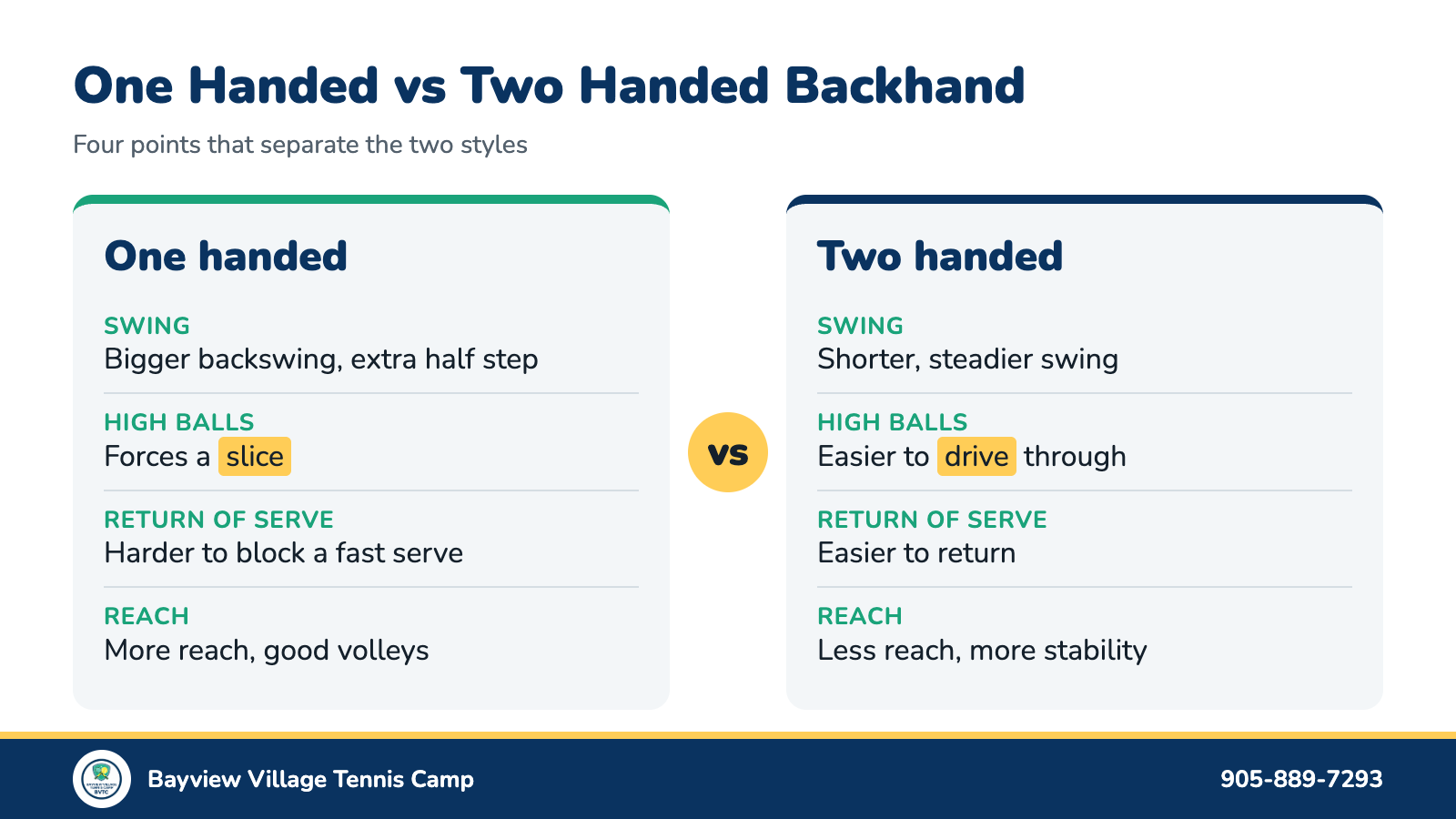
The first graphic shows the same comparison as a side by side panel.
What Are the Disadvantages of a One-Handed Backhand?
The disadvantages of a one-handed backhand are a long backswing, hard timing, weak high balls, a tough return and a strength demand. Each one costs the player time or control. Five points explain the full cost.
- The stroke needs a bigger backswing and an extra half step to prepare.
- Contact must be clean and in front, so timing has to be near perfect.
- High balls force a slice instead of a drive.
- A fast first serve is harder to block back with one hand.
- Strength and control take longer to build in a young arm.
The entry and a level 3 Lawn Tennis Association (LTA) coach writing for Talking Tennis both name the backswing and timing demands. The coach adds that strength and control are hard to build. Each point gets its own short answer below.
Why Does a One Handed Backhand Need a Bigger Backswing?
A one handed backhand needs a bigger backswing because one arm must create all the racket speed. The entry states that the stroke requires an extra half step to execute a proper backswing. That half step is lost time against a fast ball.
A player who is late on the half step meets the ball behind the body. The racket face then opens and the ball floats. Good footwork fixes the problem, which is why footwork drills matter more for one handers than for two handers.
Why Do High Balls Cause Problems for a One Handed Backhand?
High balls cause problems for a one handed backhand because the arm has little support above shoulder height. The entry notes that the stroke forces players to hit high balls with slice. A slice keeps the ball in play but gives up attack.
Heavy topspin pushes the ball high, so this weakness shows up against strong forehands. A junior who meets that pattern needs a plan for the shot. The two plans are to step back and let the ball drop, or to take it early on the rise.
Why Is the Return of Serve Harder With One Hand?
The return of serve is harder with one hand because a fast serve leaves almost no time for a long swing. Tennis.com quotes Annacone saying that returning serve is much easier with a two hander. The two hander can block the ball back with a short, firm motion.
The one hander has a fix. A compact chip or block with a short backswing steadies the return, according to a Cross Court coaching guide. Work on return practice turns this into a habit.
Does a One Handed Backhand Need More Strength?
A one handed backhand needs more strength because a single arm must control the racket through contact. The Talking Tennis coach says the shot demands more strength and control than a two hander. A growing player can struggle with both.
The racket also feels heavier when one hand holds it. For that reason, we match racket size to the player and check it often. Our guide on racket size explains the steps.
Why Is a One Handed Backhand Harder for Juniors?
A one handed backhand is harder for juniors because a child has less arm strength and a smaller frame than an adult. The racket feels longer and heavier in one hand. The swing then slows down, and the ball lands short.
Young players also change in size every season. A stroke that felt solid in spring can feel loose by fall. Our child coaching guide explains how coaches pace that growth.
Knowing the disadvantages of one handed backhand play also means knowing the fixes. The list below gives four that coaches use.
- Start the turn of the shoulders as soon as the ball leaves the opponent’s racket.
- Take the ball early or step back and let it drop on high shots.
- Use a short chip or block on fast serves.
- Build forearm and shoulder strength with light, regular practice.
These fixes help, but they take time that a new player may not have in a busy camp week.
Is There Any Advantage to a One-Handed Backhand?
There is an advantage to a one-handed backhand in reach, attack, slice and volleys. The Talking Tennis coach lists all four as strengths of the shot. The one hander extends further from the body, so the player can cover wide balls.
Attack is the second gain. A player who hits through the ball with one arm can step in and drive a short ball. The same grip and arm path carry over to the backhand volley and slice, as the table below shows.
| Shot or need | Better fit | Why |
|---|---|---|
| Wide balls | One handed | The arm extends further from the body |
| Backhand volley and slice | One handed | The grip and arm path carry over |
| Fast serves and high balls | Two handed | Two hands block and drive with stability |
| Learning in the first year | Two handed | Easier to develop |
These gains are real, but the next section shows why fewer players choose them now.
Why Is One Handed Backhand Dying?
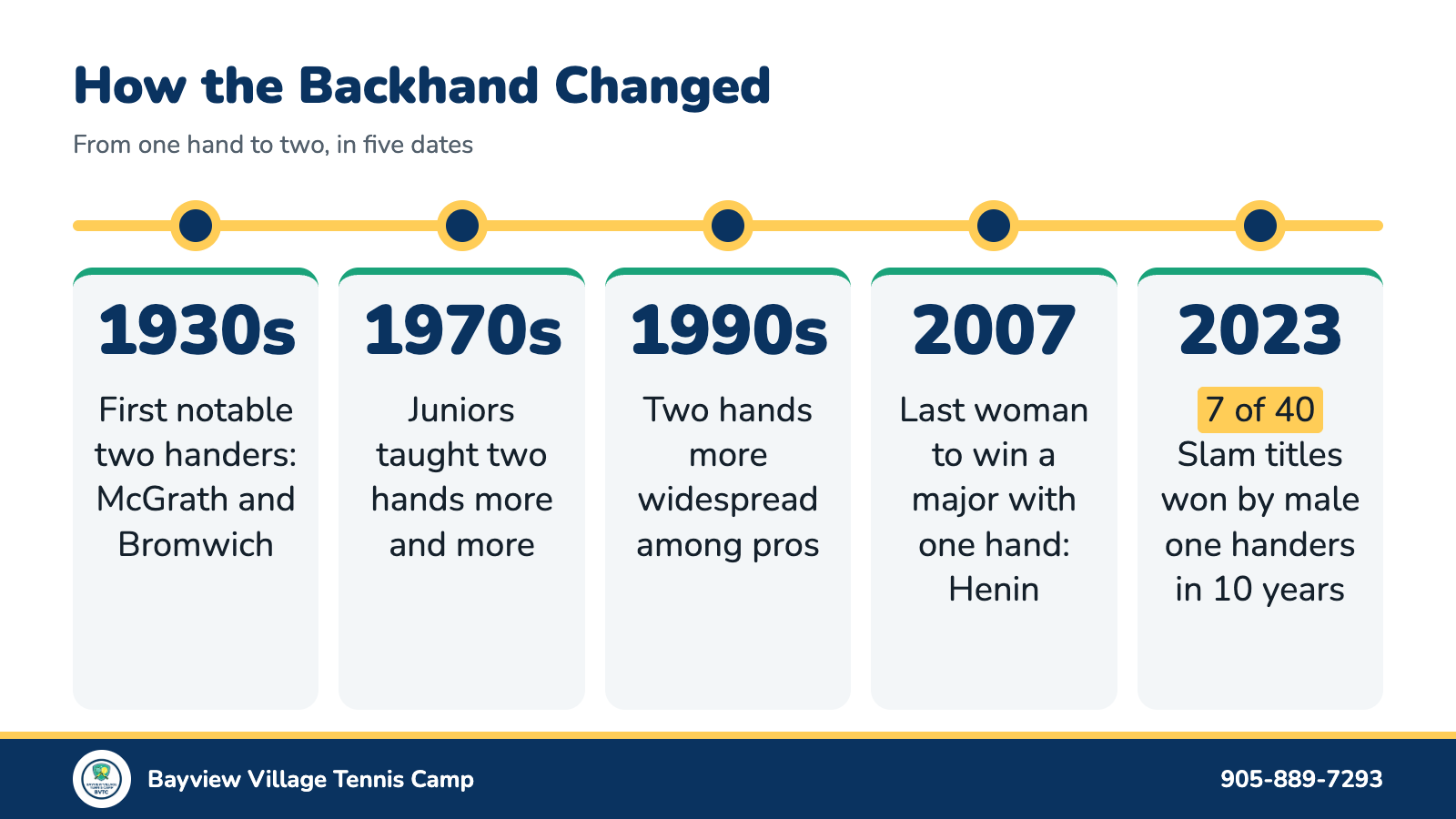
The one handed backhand is dying because the two handed backhand handles modern serves and heavy spin better. Tennis.com states that male one handed players won just seven of 40 Grand Slam singles titles in the 10 years to 2023. The same article says the last woman to win a major with one hand on the grip was Henin in 2007.
The shift is not new. Tennis.com reports a big move away from the one hander over the 15 years to 2023. Cross Court adds that only a handful of the top 50 players use one today.
History explains the pattern. The entry says the one handed backhand was the almost exclusive choice for tennis’s first 100 years. The first notable two handers were the 1930s Australians Vivian McGrath and John Bromwich. Two hands became the more widespread choice among pros from the 1990s.
Juniors followed. The entry states that since the 1970s, juniors have been taught two handed backhands more and more. The timeline graphic puts these dates in order.
This history tells parents what the game now rewards, so the next section covers what two hands add.
What Are the Benefits of a Two Handed Backhand?
The benefits of a two handed backhand are control, stability and an easier learning curve. Parents weigh the benefits of two handed backhand play against its cost in reach. The second hand steadies the racket and lets the player hit through high balls. The coach writing for Talking Tennis lists control, stability and power as advantages.
The entry adds that two handed backhands are generally easier to develop. That matters for a junior with a growing arm. It matters for an adult who has only a few hours a week to practise.
Why Choose a Two Handed Backhand for Beginners?
Choose a two handed backhand for beginners because the second hand supplies the strength that new players lack. The racket stays square at contact. Rallies last longer, which keeps a young player keen.
Cross Court gives the same advice in short form: an undecided beginner starts two handed. Our beginner backhand guide covers the grip and swing steps for both styles.
Is Two Handed Backhand More Powerful?
A two handed backhand adds stability and control, and the Talking Tennis coach lists power as one benefit. That is the sourced answer on whether two hands hit harder. No source in our research gives a speed figure, so we give none.
In practice the second hand lets a smaller player drive through the ball without a long swing. That shortens the swing and keeps contact clean.
Where Does a Two Handed Backhand Fall Short?
A two handed backhand falls short on reach and on balls that sit far from the body. The Talking Tennis coach names less flair as a cost, and lists more reach as a strength of the one hander. A second hand limits how far the player can stretch.
The fix is a one handed slice. Cross Court notes that even committed two handers hit slice with one hand, so every player needs the shot. Our grip comparison shows the hand positions behind each style.
Honest coaching covers both columns, because a family should hear the weak points of the style they pick. Beginners then choose with clear eyes. That sets up the main decision.
Is a One Handed or Two Handed Backhand Better?
A one handed or two handed backhand is better depending on the player’s age, strength and goals. A beginner, a small junior or a player who wants steady rallies suits two hands. A player with long reach, light hands and a love of slice and volleys may suit one hand.
The Talking Tennis coach advises players to do what feels most comfortable and to ask a club coach. That advice fits our camps, where both styles are coached side by side. The steps below help a family decide.
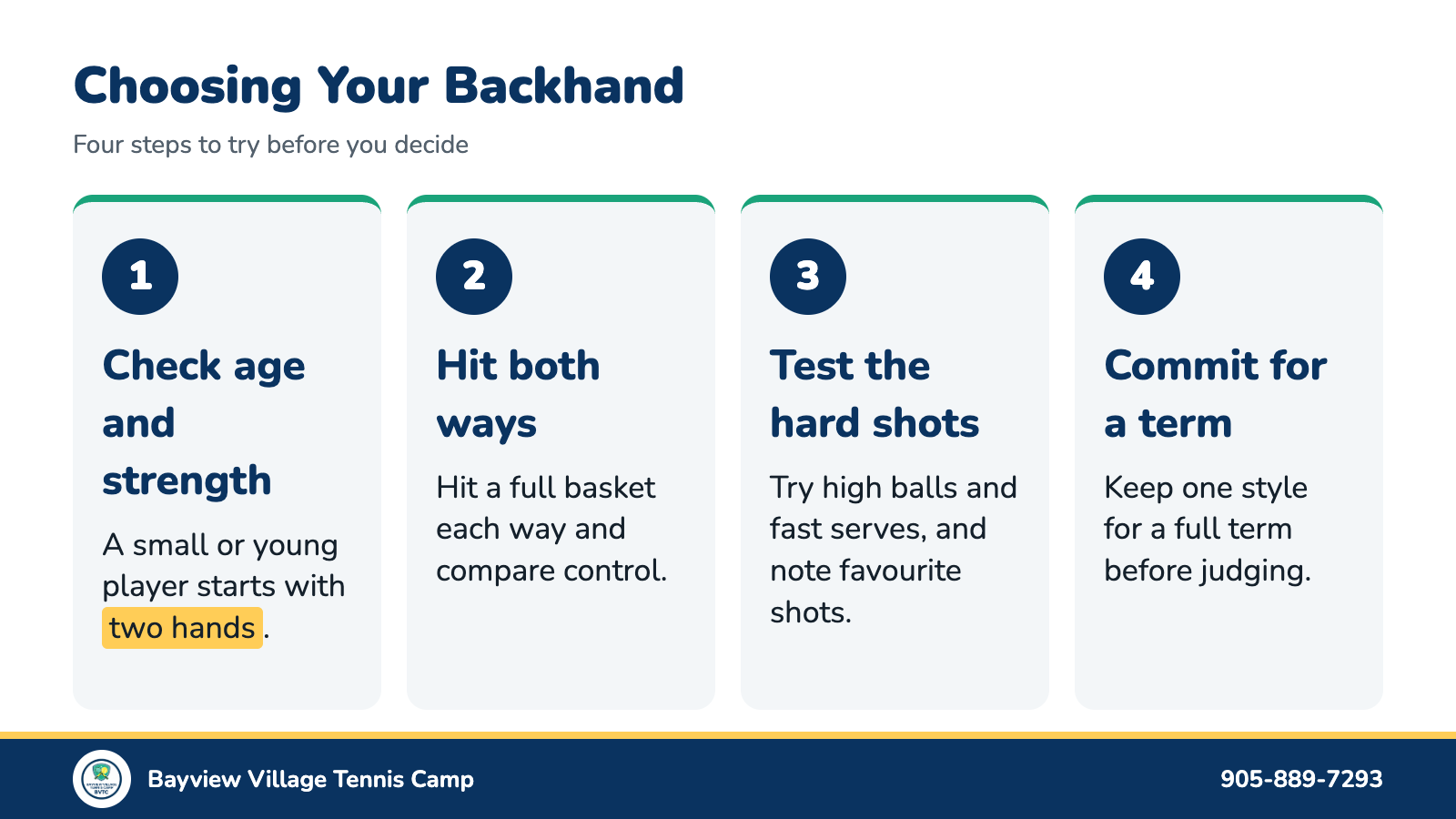
- Check the player’s age and strength. A small or young player starts with two hands.
- Hit a full basket of backhands each way in a lesson and compare control.
- Test both styles on high balls and fast serves, and note the favourite shots.
- Pick one style and keep it for a full term before judging.
The decision graphic turns these steps into a short checklist.
Players who like net play can use our guide to the volleys, where the one handed grip has a real advantage. The next question is what happens when a player already has a style and wants to change.
Should I Switch to a One Handed Backhand?
You should switch to a one handed backhand only when you have a clear reason and the time to relearn the stroke. Cross Court warns to expect months of feeling worse before you feel better. A match season is a poor time to start.
The Talking Tennis coach notes that most one handers first learned the shot with two hands until they felt strong enough. A player can therefore take the same route, using the two handed shot first. A coach can then judge whether the one handed swing is ready.
Tennis.com reports that Lendl preferred to learn to return with a two hander and then rally with a one hander. A hybrid plan like that suits a player who owns both shots. A new player should build one shot before adding the second.
The reasons to switch are real but few. A player who wants more reach or a better slice may gain from it. A player who struggles with a short, fast ball may lose ground.
What Else Should You Know About One Handed Backhands?
Do Any Pros Use a One Handed Backhand?
Some pros do use a one handed backhand, but the group is small. Cross Court says only a handful of the top 50 use one. Tennis.com reports that male one handers won just seven of the 40 Grand Slam singles titles in the 10 years to 2023.
Do Two Handed Players Need a Slice?
Two handed players can still hit a slice, and every two hander should learn one. Cross Court notes that even committed two handers hit slice with one hand. The slice gives a low, defensive ball and a change of pace.
Which Backhand Is Better for Kids?
The two handed backhand is better for kids who are still growing. The entry notes juniors have been taught it more and more since the 1970s. A child can add a one handed slice now and a one handed drive later. Young players start on red courts courts, where the light ball is easier to hit with either style.
Is It Hard for Adults to Learn Either Backhand?
It is no harder for adults to learn either backhand than for juniors, but adults feel the timing demand sooner. Two hands give a quicker start for adult beginners. A coach can then add one handed shots later.
How Bayview Village Tennis Camp Coaches Both Backhands
Bayview Village Tennis Camp coaches both backhands for juniors and adults. Our Tennis Canada certified coaches run junior camp weeks, fall and spring junior programs, adult group lessons and private lessons. We teach on our North York courts. A player can try both styles and keep the one that feels right.
A short trial with a private coach settles the one handed vs two handed backhand question with real swings, not guesses.
Call 905-889-7293 to book a trial lesson for your player.
Families who want a full programme can start at the Bayview Village club.